Waking the Dead on the Slopes of Cruachu

image

(Image: Author)

For the day that’s in it, here’s a little folk horror flavoured archeo-echtrai which happened to me a few years ago during a visit to Cruachu (aka Cruachán, aka Rathcroghan), a location dripping in early medieval dindsenchas. Its a ritual complex of barrows, mounds, avenues and enclosures –  a prehistoric palimpsest of generations of ‘the dead’ carved into a ‘living’ landscape and overlaid with early medieval meaning. Think late prehistoric burial, assembly, inauguration, oenach festivals, mass meetings, power performances, legitimacy, declarations, legal decisions, disputes, drinking, carousing, games, fighting – all on a regional scale – and anything else that may have caught their fancy at any given time.

Cruachu and its hinterlands loom large in early medieval myth, mayhem and pseudo-folk memory. It occupies a prime position as one of the so called ‘royal’ sites of early medieval Ireland. A western version of Tara, and Emhain Macha. It appears as a key symbolic location in early Irish literature, such as the Táin Bó Cúailnge and Echtra Nerai (The Strange Adventure of Nera) – the latter having samhain and the mounds of the dead as a key backdrop to portrayed events.
Continue reading

Blogging about Research on Archaeological Blogging via an Archaeological Blog Undergoing Research

vh

Screengrab: GIS Search Results for Vox Hiberionacum (shamelessly stolen, I mean, inspired by the Robert M Chapple Blog)

Meta, eh?

Fleur Schinning is an MA Student currently writing a thesis in Heritage Management at Leiden University in the Netherlands. Her research will focus on the use of blogs and social media and how they contribute to the accessibility of archaeology in the Netherlands. She is looking at several archaeo-blogs from UK, Ireland and USA in order to explore how blogging in archaeology contributes to public archaeology. Vox Hiberionacum is one of them.

 As part of this, she is very interested in hearing from you, dear blog readers.

She has set up a short online questionnaire (click here) in order to ask visitors of this (and other archaeo-blogs) several questions regarding their motives for visiting, reading etc. She would be very grateful if you could spare a few minutes to contribute to her research findings.

I understand that all participants also have a chance to win a small prize: 6 issues of Archaeology Magazine.

Ah go on, help an archaeo student out.

Cheers.

St. Patrick and #MarriageEquality: A Modern Day Homily from the Fifth Century

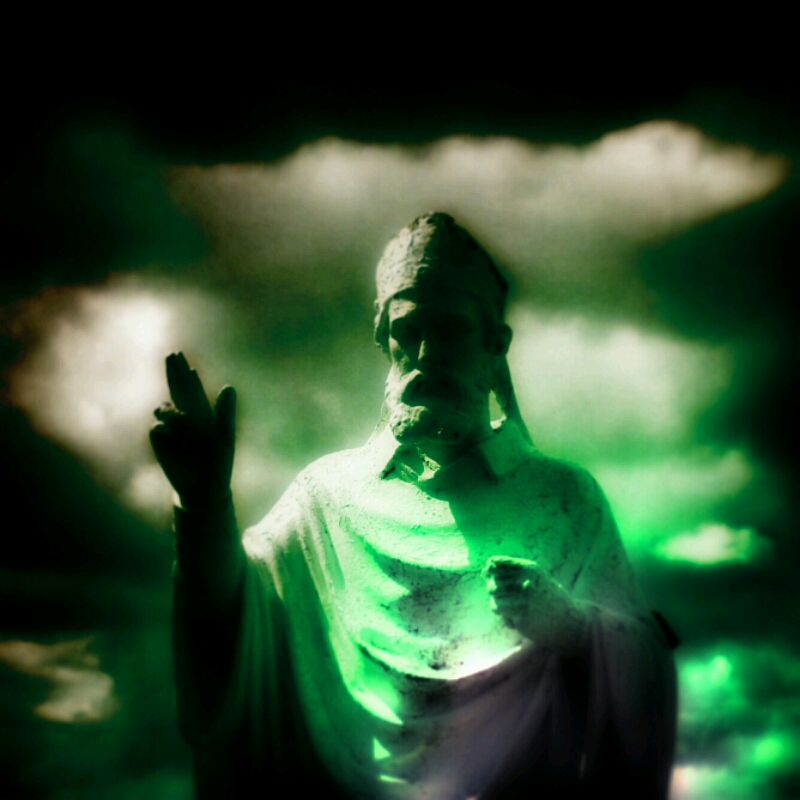
wpid-img_20140914_175157_antonio_kryptonite.jpgPreface

As a rule of thumb, I have always tried to steer clear of contemporary politics on this blog. I generally have little to add and no real desire to do so. Recent commentary however, along with ludicrous posters, attempted obfuscation, deliberate misinformation and outright attempts at scaremongering on the forthcoming Irish Marriage Equality Referendum by minority fringe groups, pseudo-academic research bodies and pretend charities doubling as lobby groups, have compelled me, along with others it seems, to make an exception. In doing so, I take a certain measure of consolation in the fact that I am not really engaging in petty political rhetoric. Marriage Equality for same sex couples is a human and civil rights issue, transcending mere politics.

While I am quietly confident that the proposed referendum question will be passed, there nevertheless remains the rather unpleasant business of having to put up with thinly veiled prejudice masquerading as opposing opinion from certain people who claim to be compassionate Christians. Amid the stifling stench of sanctimonious self-entitlement and the ever increasing magnus opus gei rhetoric emanating from oratorial orifices in recent days, it has become abundantly clear – that my country needs me. I hereby give notice that I am returning the favour and thus commend unto you the following historical perspective towards the issues of the day.

The earliest historical evidence for Christianity in this island (the writings of St. Patrick) contain some very interesting parallels to current events. Before he was ever elevated to patron saint and symbol of All-Ireland religious orthodoxy & authority, the Historical Patrick was someone with real Christian empathy and concern. He was someone who championed and defended Irish people who were being denied recognition and equality – by other Christians. He was someone who repeatedly suffered from religious stigma and prejudice attached to homosexuality. There were deliberate efforts – from fellow Christians – to harness contemporary cultural homophobia and force him into social and political exclusion. Last, but not least, he also happens to be the earliest historically attested person within Ireland to have engaged in ‘same sex’ child adoption.

Continue reading

An Archaeology of Star Wars: A Long Time Ago On An Island Far Far Away

IMG_2509 copy

View from Skellig Michael – Image: regienbb / flickr (CC BY 2.0)

Rumours abound that this Thanksgiving weekend in the States will see the release of the first teaser trailer/preview of the new Star Wars (7) film – scenes for which were shot on the early medieval monastic island of Skellig Michael, Co. Kerry. In anticipation, here’s a little something on the early history and archaeology of Skellig Michael itself – and why its perhaps appropriate that ‘an unearthly corner of planet earth, left behind on an island far, far away’ continues to be (re)used as the setting for a re-booted mythical blockbuster. Or something.

What better place to depict an ancient, mystical, martial asceticism in a galaxy far, far away than an actual ancient, eremitic, settlement dripping with stone-cold monastic austerity, located at what was for centuries the very ends of the earth, seven miles off the very tip of a western Irish peninsula?

Continue reading

Saints in Scottish Place-Names

14780922874_0b0dbd4b18_o

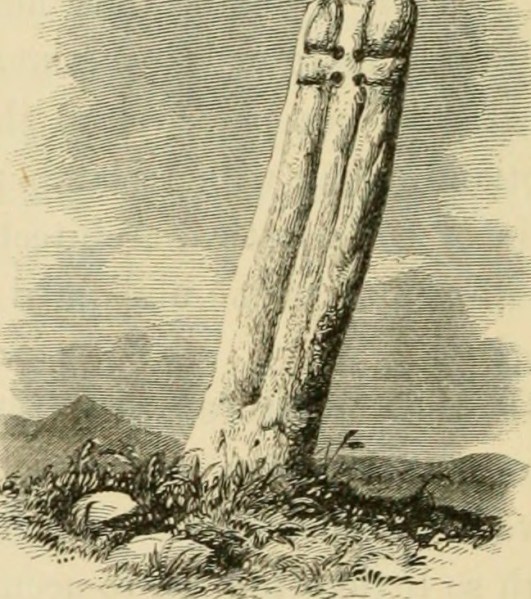
Image: Internet Archive Book Images / “The archaeology and prehistoric annals of Scotland” (1851) / Flickr (Public Domain)

Christmas has come early here at Vox Hib HQ with the very welcome and long awaited launch of the Database of Scottish Hagiotoponyms, aka Saints in Scottish Place-Names

This website is the result of a project, ‘Commemorations of Saints in Scottish Place-Names’, funded by a Research Project Grant from The Leverhulme Trust (2010-13), and undertaken by staff in the University of Glasgow’s School of Humanities (Celtic & Gaelic, and HATII).
Professor Thomas Owen Clancy (Principal Investigator)
Dr Rachel Butter and Gilbert Márkus (Researchers) & Matthew Barr (Systems Developer)
The database that has been assembled presents the fruits of our research. It contains over 5000 places, 13,000 place-names, and some 750 saints potentially commemorated in these names.

Continue reading

‘All the Rabble Rout’: Swimming With Saints at Lahinch, Co. Clare

3867536348_bf3423c028_b

Image: Andrew Miller / Flickr / (CC BY-NC 2.0)

I love me an auld folklore mystery. Especially when it involves the folklore of the west coast of Ireland. Throw in the possibility that it may contain enshrined elements of past ritual activity associated with surviving archaeology and I’m all yours. So when DrBeachcombing of Beachcombing’s Bizarre History Blog recently sent notice of a fantastic nugget of folklore concerning an 1830s Bathing Mystery at Lahinch (Co. Clare) which was classified by stuffy antiquarians as a ‘Pagan Observance on the West Coast of Ireland’… needless to say, he had me at ‘WTF’.

For the main event and details you should read the original post by DrB, which involves anonymous nineteenth century correspondence, a presidential address to the Folklore Society and the mysterious and scandalous bathing habits of the local population of nineteenth century Lahinch. These appear to have involved naked males, wooden implements of mass destruction, ceremonial procession, obscured rituals shielded from profane eyes and wild pagan delight along the lines of the Wicker Man afterwards. What are you still doing here? Read it.

“A sort of horror seemed to hang over everything until the bathing ceremony was completed, and everyone, particularly the women, seemed anxious to keep out of the line of procession, while the ceremony was strictly guarded from the observation of the ‘profane’. As soon as it was over, all the rabble rout, both male and female, of the village flocked about the performers, and for some time kept up loud shouts.”

Laurence Gomme, Presidential address to the Folklore Society, 1892

Continue reading

Old Books and Old Wine: Armagh and the Comarba Patrick

3080179627_bbfb3d24a8_o

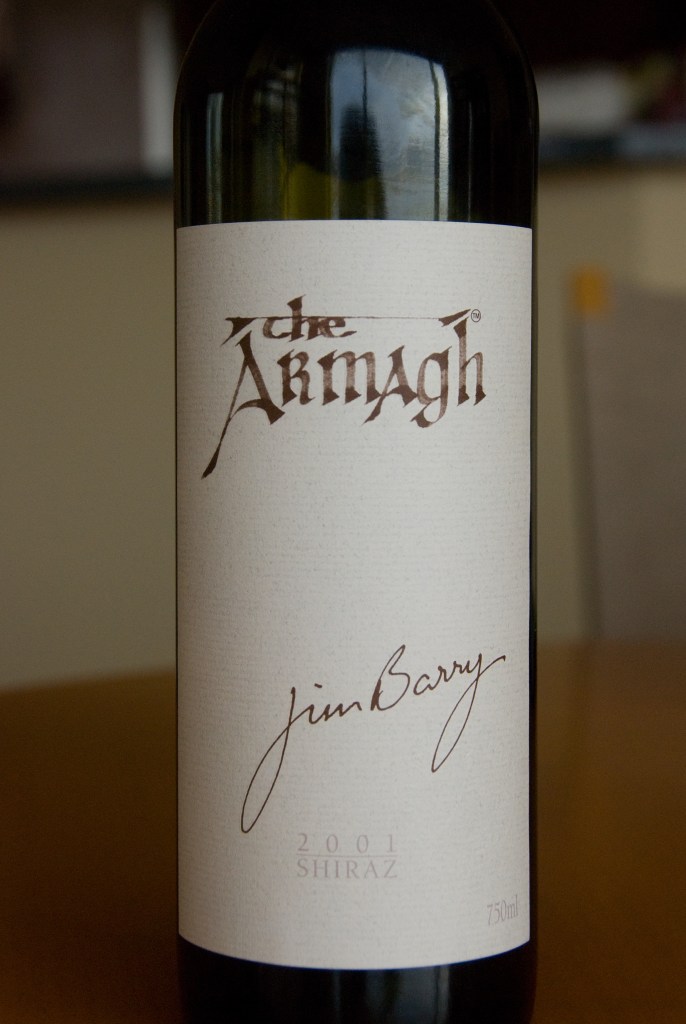
Old times, old manners, old books, old wine…. ‘The Armagh’ – Image: Jonathan Caves / Flickr / (CC BY-NC-SA 2.0)

A fascinating historical tidbit of early medieval myth and ritual in the news today concerning the (long-expected) retirement of the current Archbishop of Armagh and the official appointment of his successor.

‘Archbishop Eamon Martin… today becomes Archbishop of Armagh, Primate of All Ireland and Coarb Phadraic.’

Remarks by Cardinal Seán Brady

For those unfamiliar with the historical and modern ecclesiastical landscape of Ireland, the holder of the office of the Armagh archbishopric is considered the ecclesiastical head of the Roman Catholic Church in Ireland. An archiepiscopacy since the twelfth century church reform, it replaced an older insular system where the abbots, or leaders, of the Armagh church were long considered the coarbae (‘heir/successor’) of St. Patrick and the de facto leaders of the medieval Irish church – a status and authority which can be traced back to the seventh century AD.

Continue reading

Through the Grass, Darkly: Irish Folk Horror

img_20161026_104040_processed

Image: Author

Folklore has a profound and unsettling impact on the imaginative perception of landscape, identity, time and the past. Folk memory is often manifested as an intrusive and violent breach from an older repressed, ‘primitive’ or ‘barbarous’ state that transgresses the development of cultural order.

Extract: Fiend in the Furrows Blog

Feral Fields

Despite being an early medievalist and a big film fan, I have never had much interest in horror/fantasy genres in general. I prefer ‘the real stuff’ – far more terrifying. But folk horror is different. Its something that has always been loitering in the shadows of my peripheral vision – as a child, as an adult, as a consumer of culture, as an archaeologist & historian – despite only being consciously labelled as such in my head in the last few years.

I grew up in 1980s Ireland – bleak and cloudy in more ways than one – reading and watching stuff which is now considered classic staples of the genre.  New housing estate on the edge of urban sprawl. Invasive concrete arteries slowly spreading into moody rural hinterlands. Feral fields and hedgerows only a short bike ride away.

I raided wood pallets from industrial factories for Halloween bonfires one day – picked blackberries, collected frog spawn and built tree houses the next. Cycled along unfinished motorways past castle ruins and burial mounds. Explored ‘haunted’ country lanes in twilight, peopling stumps, bumps and ditches with youthful abandon.  It was one big halfway house of a childhood. Halfway between then and now, here and there. Through the grass, darkly. Half afraid to put away childish things.

Continue reading

All Quiet on the Western Front: An Archaeology of Inishark, Co. Galway

Afer a few days on a deserted western Island, it usually goes a bit wickerman...

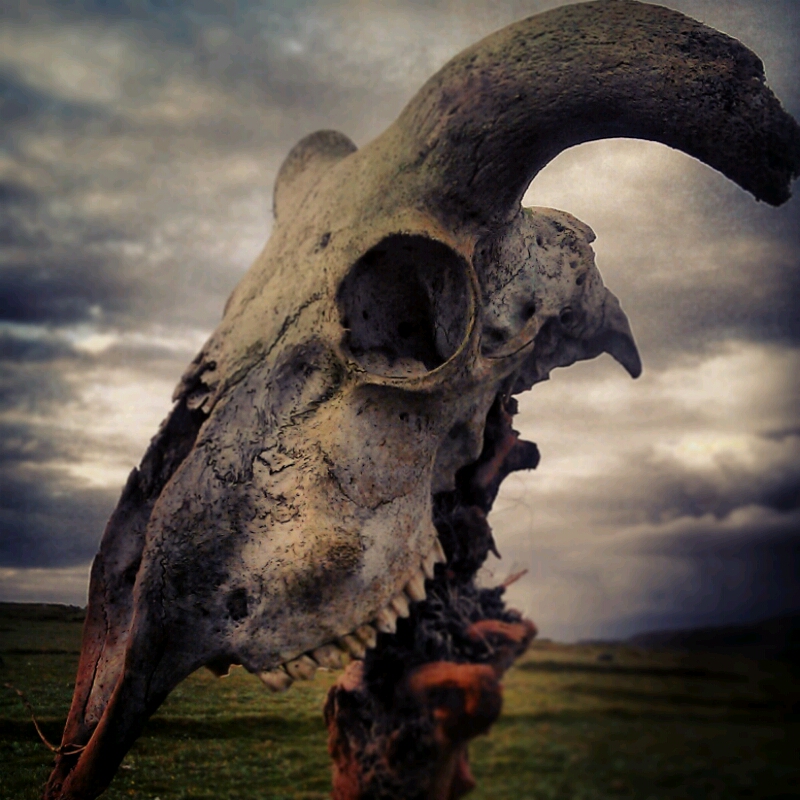
Skull of one of the only indigenous islanders left: sheep (Image: Author)

I’m just back from two weeks excavations on the deserted island of Inishark, Co. Galway, situated just west of Inishbofin – one of the most westerly outposts of Ireland. Next parish: Newfoundland.  Since 2010 I have been privileged to be a team member of an annual archaeological and historical survey of the island as part of the Cultural landscapes of the Irish Coast Project (CLIC) led by Professor Ian Kuijt, Note Dame University. This years archaeological excavations were directed by Franc Myles, one of the most experienced (and funniest) field archaeologists in Ireland.

Inishark (Inís Airc) was once home to several hundred people at the height of its settlement during the 19th and early 20th century – which had sadly dwindled to just 24 islanders when it was finally evacuated on the 20th October 1960. Like many other islands, the famine and successive bouts of economic depression, poverty and emigration took its toll on the native population. It never had electricity, modern communication or running water and unlike many others, was completely isolated for weeks on end during bad weather and winds.

Despite the hardy nature of the islanders themselves – some of the best boat people in the country (they had to be – nine miles out in the North Atlantic Ocean) – their basic living conditions and lack of emergency medical attention were such that they were eventually resettled on the mainland. Their story, and that of the island is perhaps best known to Irish audiences from the fantastic TG4 documentary from a few years back –  Inis Airc: Bás Oileáin – (Inishark: Death of an Island).

Today, 50+ years after evacuation, the entire island is a relict landscape of a once vibrant community – now abandoned and ever so slowly being reclaimed by the earth. Field walls and stone houses stand in various states of dereliction; the lumps and bumps of lazy beds, turf racks and kelp kilns bear silent witness to the islanders self-sufficiency. Stones peeking out of the earth tell tales of eking a living from the earth. A frozen landscape, fossilized in time and space – slowly sinking beneath the weight of its own sad echos and the ever-present natural erosion from the merciless Atlantic Ocean.

Continue reading

EMAP- Greatest Hits Vol 1: Now Thats What I Call Archaeology

885886_665258363545035_195922879323719923_o

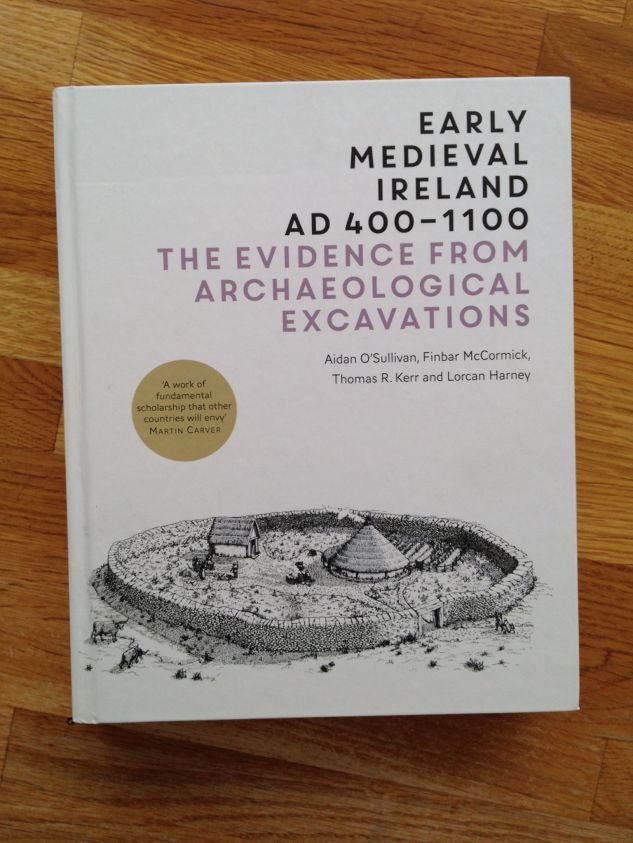
‘Early Medieval Ireland, AD 400-1100. The Evidence from Archaeological Excavations’.

A few days ago saw the official launch of what can only be described as the archaeo-bible for the next generation (and beyond) for scholars of Early Medieval Ireland. Essentially, it contains the most up to date survey, run-down and compilation of everything we thought we knew, everything we have learned, and everything we think we now know, arising from archaeological excavations (1930 to the present).  This is the latest offering from the Early Medieval Archaeology Project and is the product of several years of dedicated work and research.

Continue reading